What was announced or recorded
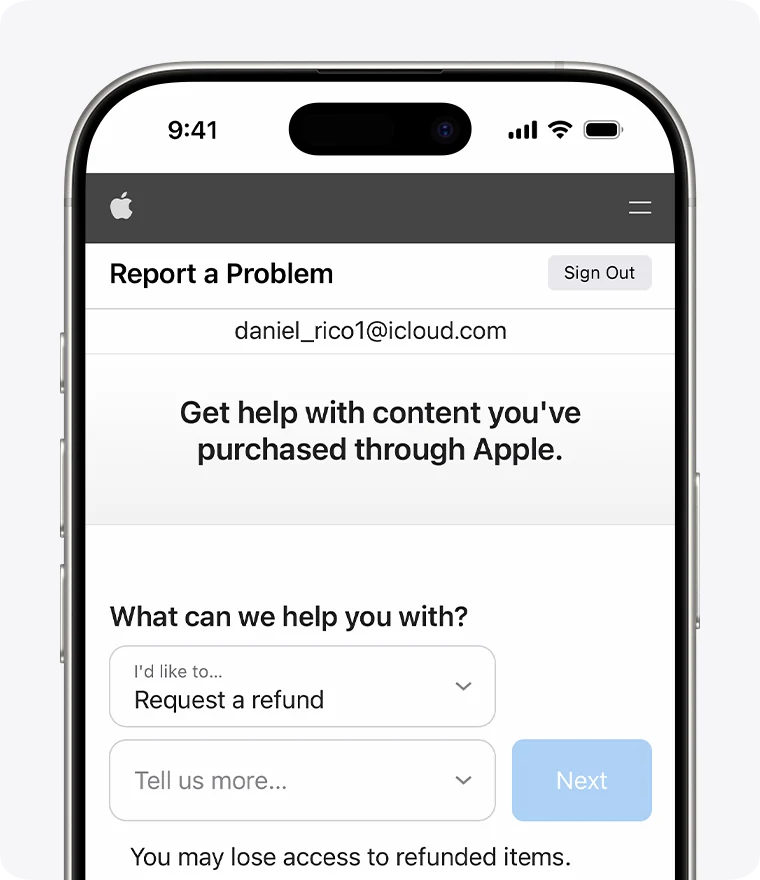
As retrieved on 16 September 2026, three documents describe three separate refund paths for a coin-based drama app. Apple's support page routes a refund request through reportaproblem.apple.com and promises to “wait 24 to 48 hours for an update on your request.” Google Play's support page states that refund policies “are different depending on what you bought, when and how you paid,” pointing to separate policies for the EEA and the UK. ReelShort's own user agreement, published by Crazy Maple Studio, states that payments and virtual-currency purchases are “final and non-refundable” except at the company's “sole and absolute discretion,” and that unused coins are forfeited on account termination.
What the documents establish
The store's refund policy and the developer's own terms are not the same instrument, and they do not agree. A purchaser can ask Apple or Google Play for money back under the store's own consumer policy regardless of what the developer's terms say, because part of the purchase runs through the store's payment system. The developer's no-refund clause governs only what Crazy Maple Studio itself will do if approached directly. Google's page also flags that a shared account or “abusing our policies” can void an otherwise-eligible refund, and Apple treats a pending, unreceipted charge as not yet eligible to contest.
Announced versus delivered
The store pages govern the purchaser's relationship with Apple or Google specifically; ReelShort's terms govern the relationship with Crazy Maple Studio specifically; none of the three documents states what happens when the two paths conflict — for example, after a store grants a refund for coins the app's own records already show as spent. That reconciliation is left undocumented across all three sources.
What to watch
This is an editorial guide to where the two kinds of policy sit, not advice on any individual refund case. The detail worth checking in practice is which path a viewer actually used to get money back, and whether the app subsequently removed the refunded coins from their balance, since none of the three documents describes that step.
- Was the refund sought from the app store directly, or from the developer under its own terms?
- Does the purchaser's location put them under a region-specific policy, such as the EEA or UK pages Google references?
- Did the app deduct the refunded coins or content access after a store-granted refund was processed?
A coin refund has two possible owners, a store and a developer, and the documents that govern each say nothing about the other. Knowing which path was used, and what it actually covers, is the first step before treating any refund outcome as settled.
Sources & evidence
support.apple.com · Official source
Source date: Not stated by source · Checked: 16 Sept 2026
- Describes Apple's own refund request process and timeline, independent of any developer's terms.
support.google.com · Official source
Source date: Not stated by source · Checked: 16 Sept 2026
- States that Google Play refund eligibility varies by purchase type, payment method and location, with regional policy pages.
crazymaplestudios.com · Official source
Source date: Not stated by source · Checked: 16 Sept 2026
- States ReelShort's own no-refund position on payments and virtual currency, separate from either store's policy.