What was announced or recorded
Sensor Tower, a mobile-analytics firm, has published two dated posts estimating the short-drama app category's scale. A January 2025 post by analyst Marco Scacchi covers full-year 2024. A later July 2025 post by analyst Rui Ma extends the estimate through the first quarter of 2025 and states the firm's method directly.
What the documents establish
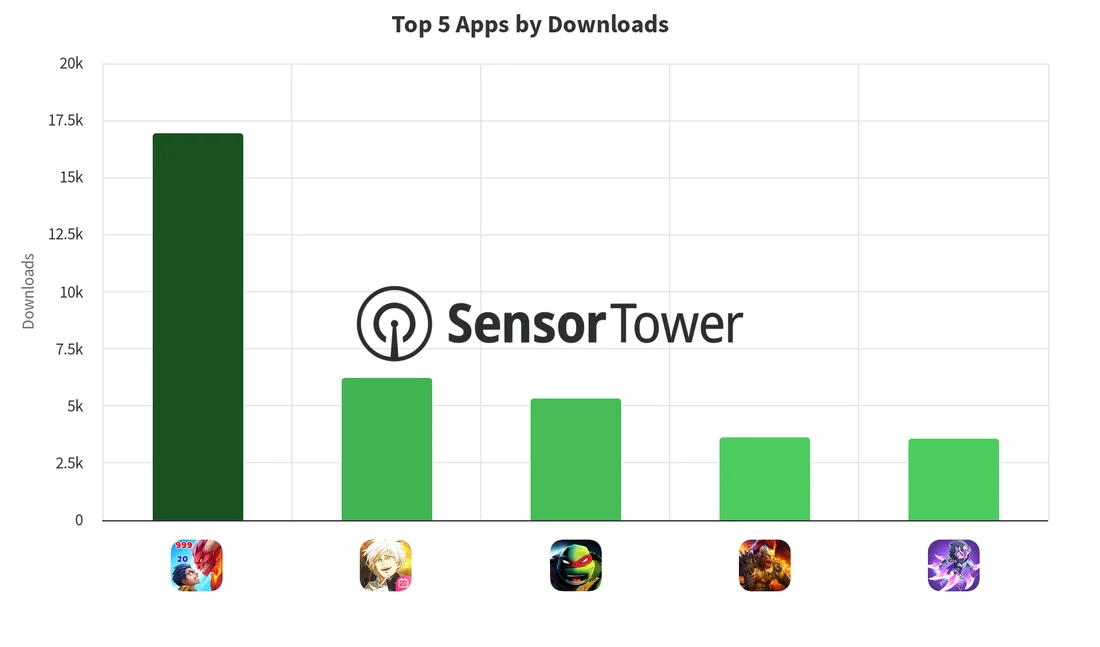
The July 2025 post states its own scope: its revenue data covers 'in-app purchase (IAP) estimates from App Store and Google Play', explicitly excluding ad monetisation, revenue from third-party Android stores, and direct payments made through official brand websites. Within that scope it puts global category revenue at roughly $700 million for the first quarter of 2025 and roughly $2.3 billion cumulatively through March 2025, with downloads exceeding 370 million in the quarter, a 6.2-times increase year-on-year. The January 2025 post covers the prior full year: downloads rose by 320 million year-on-year in 2024, the three leading apps captured 76 percent of category downloads, and the United States accounted for 60 percent of global mobile revenue for the category in 2024, against 5 percent for Japan and 3 percent for Indonesia.
Announced versus delivered
These are named estimates, not company-reported revenue: the stated method excludes advertising income, non-store Android payments and direct website payments, so an app's real revenue can run higher than the IAP figure Sensor Tower publishes for it. The two posts also use different periods and different named authors, which is normal for a firm publishing a running series rather than one audited report, but it means a reader comparing the 2024 full-year figures to the 2025 first-quarter figures is comparing two separately dated estimates, not two points from one release.
What to watch
Editorially, the more useful check is not the headline dollar figure but whether a company's own disclosed results, where one exists, move in the same direction as Sensor Tower's estimate for that company; a platform's own quarterly filing, discussed elsewhere in this dossier, reports growth rates rather than the same absolute figures, which is exactly the kind of gap an estimate alone cannot close.
- Does the estimate's stated exclusion list, ad revenue, third-party Android stores, direct web payments, change which app looks largest?
- Are the 2024 and 2025 figures drawn from the same currency base and the same set of apps, or has the tracked list of apps grown?
- Would a company's own disclosed revenue, where available, sit above or below the IAP-only estimate for the same period?
A firm that names its method and still cannot see ad revenue or off-store payments is being more transparent than one that publishes a headline number without either disclosure; the useful reading habit is to check which parts of a company's revenue an estimate like this was never trying to measure.
Sources & evidence
sensortower.com · Official source
Source date: 1 Jan 2025 · Checked: 16 Sept 2026
- States 2024 full-year download growth, top-3 download share, and revenue share by country for short-drama apps.
sensortower.com · Official source
Source date: 1 Jul 2025 · Checked: 16 Sept 2026
- States the firm's IAP-based methodology and Q1 2025 category and per-app revenue and download estimates.