What was announced or recorded
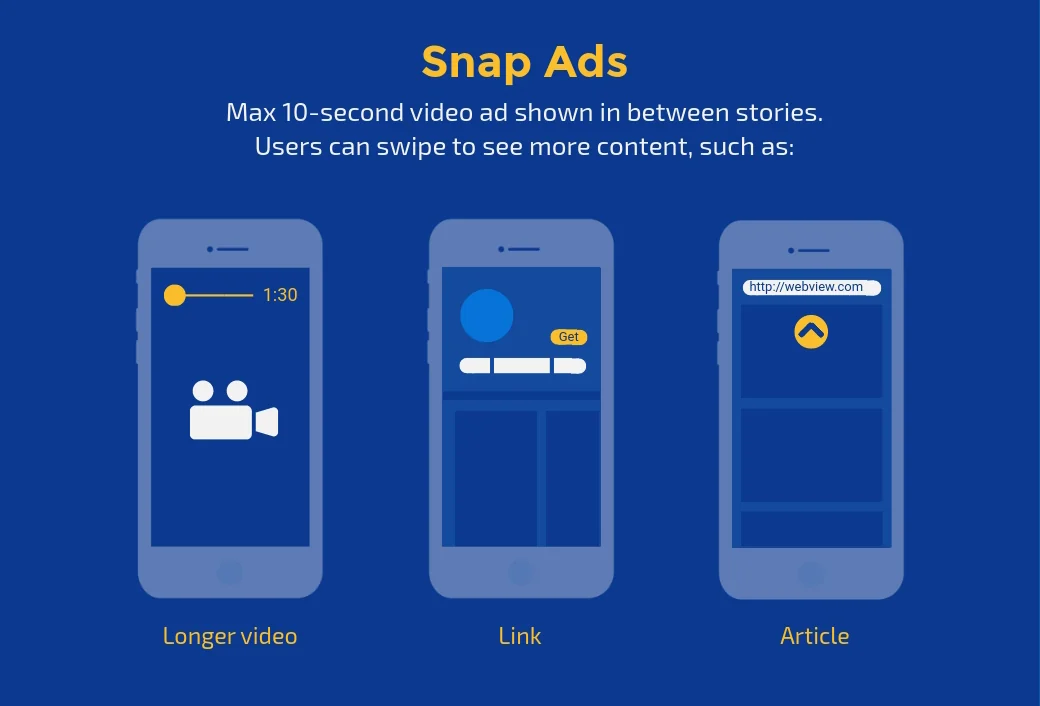
On 2 February 2017, Snap Inc. filed its Form S-1 registration statement with the SEC ahead of its IPO. The document is a retrospective account, including a company timeline that places Geofilters, Lenses, Memories and the Discover feed's launch of 'Publisher Stories' inside a single 2015 grouping, and records a Ouija film promotion as Snapchat's 'first paid advertisement' the year before. The filing describes Snap Ads directly as vertical, 'full screen video advertisements' in the familiar Snap format.
What the documents establish
The S-1 is explicit that vertical video was not an advertising afterthought bolted onto a messaging app. It describes Snap Ads as full-screen video 'in the same format' as ordinary Snaps, and separately calls its Spectacles hardware a step 'beyond our first vertical video format' — language that treats portrait orientation as Snapchat's founding shape, not a later accommodation for advertisers. What the filing does not give is a single dated press release for 'Snap Ads' as a named product; its own timeline groups launches by year, not month or day, so a specific 2015 date cannot be stated as fact from this document. A second, current source fills in how that specification reads today: Snap's own advertiser specification page, retrieved 16 September 2026, sets a 'vertical 9x16 format' at 720-by-1280 resolution across formats including Story Ads and Commercials.
Announced versus delivered
What the S-1 announces, in effect, is a completed history: vertical full-screen ads were already running inside Stories by the time of filing, reported to prospective shareholders rather than debuted to users. What has since been delivered is standardisation — the same 9:16 specification the S-1 gestures at now appears as a fixed requirement on Snap's current advertiser pages, not one format among several. What remains open is exactly when, between the 2014 Ouija placement and the 2015 grouping, the 'Snap Ads' product name went live; treat that gap as unresolved rather than backfill it with a plausible month.
What to watch
Editorially: a filing timeline organised by year is a weaker dating tool than a dated press release, and a rule that requires 'always shoot vertical' is a stronger format claim than a specification sheet that merely lists 9:16 as the default.
- Does the advertiser-facing spec require vertical capture, or only accept a vertical export from any source footage?
- Is a company's own retrospective timeline precise enough to support a specific month, or only a year?
- Has a platform's stated aspect ratio changed since the filing being cited, and does the current spec page say so?
Snap's registration statement is a stronger source for the claim that video was vertical by design than for any single ad-launch date, and a dossier built on filings should let the document's own precision set the limit of what gets asserted.
Sources & evidence
www.sec.gov · Official source
Source date: 2 Feb 2017 · Checked: 16 Sept 2026
- Company timeline groups Discover, Geofilters and Lenses launches under 2015 and describes Snap Ads as vertical full-screen video advertisements.
forbusiness.snapchat.com · Official source
Source date: Not stated by source · Checked: 16 Sept 2026
- Living specification page stating Snapchat Ads use a vertical 9x16 format at 720x1280 resolution across formats.