What was announced or recorded
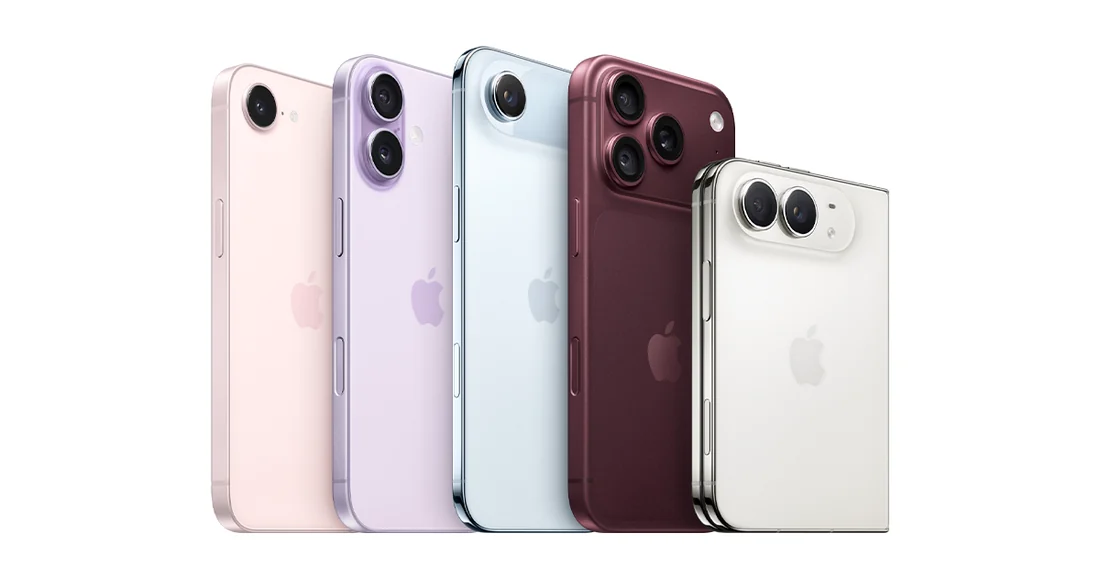
Two kinds of documentation describe the same shift: a phone's default camera app and a professional third-party app both now treat portrait capture as deliberate rather than accidental. Apple's own iPhone technical specifications page lists camera features including 4K video, Action mode stabilisation, Audio Mix noise separation, Cinematic mode focus effects applied after shooting, and Dual Capture recording from front and rear cameras at once. Blackmagic Design's Blackmagic Camera page, describing its free app for supported phones, states users "can shoot in 16:9 or vertical aspect ratios, plus you can shoot 16:9 while holding the phone vertically if you want to shoot unobtrusively." Both pages describe standing product capability as retrieved on 16 September 2026, not a single launch event.
What the documents establish
The Blackmagic page establishes that a phone can now carry the same tonal-capture tool a cinema camera uses: the app "lets you shoot in a logarithmic colorspace to preserve the dynamic range," and the page separately references an Apple Log to Rec. 709 LUT for compatible iPhones, meaning footage can be captured flat and graded afterward rather than baked into a final look on set. It is documented as available on iOS and, for Samsung and Google Pixel devices, on Android — a cross-platform tool, not an Apple-only one. Apple's own page establishes the complementary half: in-camera stabilisation and after-the-fact focus control reduce the on-set fixes a small crew needs in a single take, which matters more across dozens of short episodes than on one feature shoot.
Announced versus delivered
What is documented is capability, not any specific production's use of it; neither page claims a given vertical drama was shot with these tools. The distinction the site's house rule asks for is between a feature existing in a spec sheet and a crew actually using it on a shoot day, and these pages only establish the former. A Log-profile workflow also delivers a heavier post-production step than a straight-to-final capture, which the camera app's existence does not remove.
What to watch
Editorially, the practical marker for a vertical drama crew is whether a production's blocking and lighting plan is actually built for portrait framing from the outset, or whether portrait is applied afterward to footage composed for a wider frame; a Log-capable app and in-camera stabilisation only pay off if the shoot plan uses the extra dynamic range and steadier handheld image on purpose. That is a production-practice question the camera documentation itself cannot answer.
- Was the shot composed and lit for a 9:16 frame from the start, or captured wide and cropped afterward?
- Does the crew have the post-production capacity to grade Log footage, or is flat colour being delivered uncorrected?
- Which stabilisation or focus tools are being used in-camera versus fixed in the edit?
A phone that can shoot Log in portrait is a genuine production tool, but the documentation describing it says nothing about whether a given crew is shooting with the frame in mind or merely rotating a camera.
Sources & evidence
www.apple.com · Official source
Source date: Not stated by source · Checked: 16 Sept 2026
- Lists current iPhone camera features including 4K video, Action mode stabilisation, Cinematic mode, and Dual Capture.
www.blackmagicdesign.com · Official source
Source date: Not stated by source · Checked: 16 Sept 2026
- States the app supports vertical-aspect shooting and a logarithmic colour profile with an Apple Log to Rec. 709 LUT on compatible phones, on iOS and Android.