What was announced or recorded
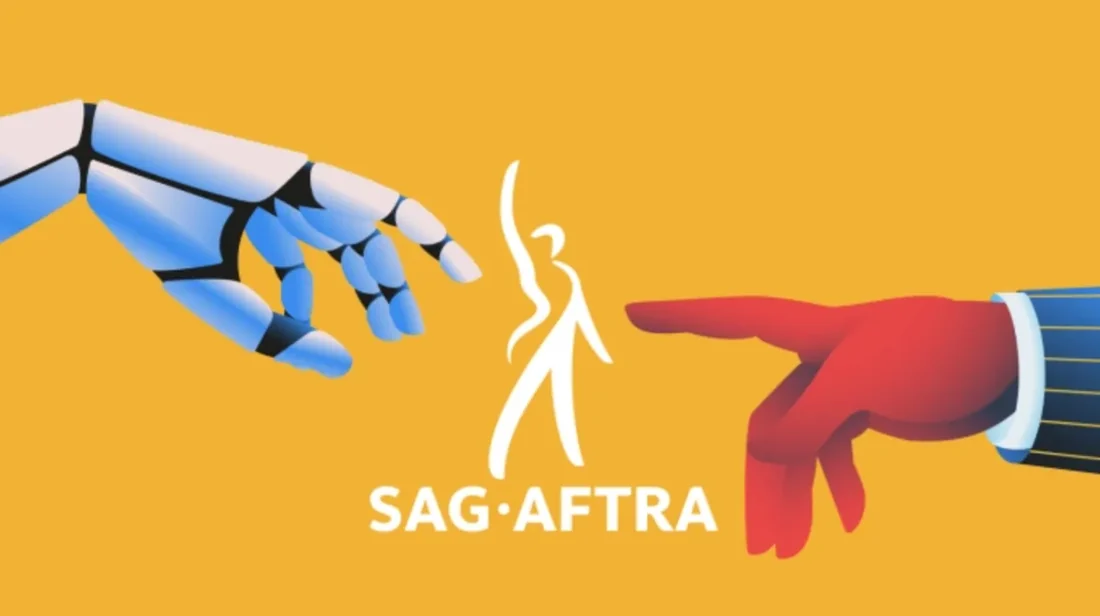
On SAG-AFTRA's own account, national voting on the 2023 TV/Theatrical Agreement with the Alliance of Motion Picture and Television Producers completed on 5 December 2023, with members approving it 78.33% to 21.67% on a 38.15% turnout, after the National Board approved the tentative deal on 10 November following agreement with the AMPTP on 8 November. The union's summary quotes president Fran Drescher calling the package one with "the most progressive AI protections ever written" — a characterisation from the union's own side, not an independent measure.
What the documents establish
The contract page and its linked Artificial Intelligence Resources section set out two categories rather than one general AI clause. A digital replica is a synthetic version of an identifiable, real performer: producers must obtain consent before creating one, give "at least 48 hours notice," and obtain informed consent again before using it, with pay matching what the performer would have earned doing the work in person; the text is specific that a replica cannot be used to avoid hiring a background performer or evade coverage maximums. A synthetic performer, by contrast, must be "wholly synthetic and not based on an actual performer"; the union instead requires the producer to give it notice and an opportunity to bargain before using one. The FAQ page adds the boundary case: a digitally created character voiced by a real actor is not a synthetic performer, so the voice work stays covered as a replica or ordinary performance.
Announced versus delivered
What was ratified is a bargaining framework — consent, notice, pay and bargaining triggers — not a technical enforcement mechanism, and the union's own FAQ concedes as much, stating the goal was "guardrails around AI, not wholly ban it," partly because federal labour law limits what a union can bargain over. What is not established is how a producer outside SAG-AFTRA's signatory relationships would be bound by any of it; the FAQ notes the union cannot control companies with which it has no bargaining relationship. The framework is also explicitly provisional, a starting point to build on when the parties return to the table roughly two and a half years later.
What to watch
Editorially, the useful marker for vertical drama is which category an AI-dubbed or face-altered performance falls into: dubbing a real performer's voice, or replacing their face for an export version, reads as a digital replica or alteration requiring consent, not a synthetic performer exempt from it. Whether export-focused producers who are not signatories apply an equivalent consent standard voluntarily, or leave it to vendor terms alone, is the gap this contract does not close.
- Is the AI process altering an identifiable real performer's voice or likeness, or generating a wholly fictional one?
- Is the producer a signatory to this agreement, or operating outside its bargaining relationship entirely?
- Does the compensation for a replica's use match what the performer would have earned working the scene directly?
A contract that distinguishes a real performer's digital double from a wholly invented one gives the industry a working vocabulary, even where its enforcement stops at the signatory line.
Sources & evidence
web.archive.org · Official source
Source date: Not stated by source · Checked: 16 Sept 2026
- States the 2023 TV/Theatrical Agreement was ratified 5 December 2023 (78.33%-21.67%, 38.15% turnout) after National Board approval on 10 November 2023, and sets the digital-replica consent, 48-hour notice and compensation terms.
web.archive.org · Official source
Source date: Not stated by source · Checked: 16 Sept 2026
- Distinguishes 'digital replicas' from wholly 'synthetic performers', states the union-notice-and-bargain requirement for synthetic performers, and frames the deal as a starting point for the next negotiation.